GamePoint Bingo Games of Bingo
- 4.6
- Rating
- 1.00M
- Installs
- Free
- Price

 Analysis by App-foxy
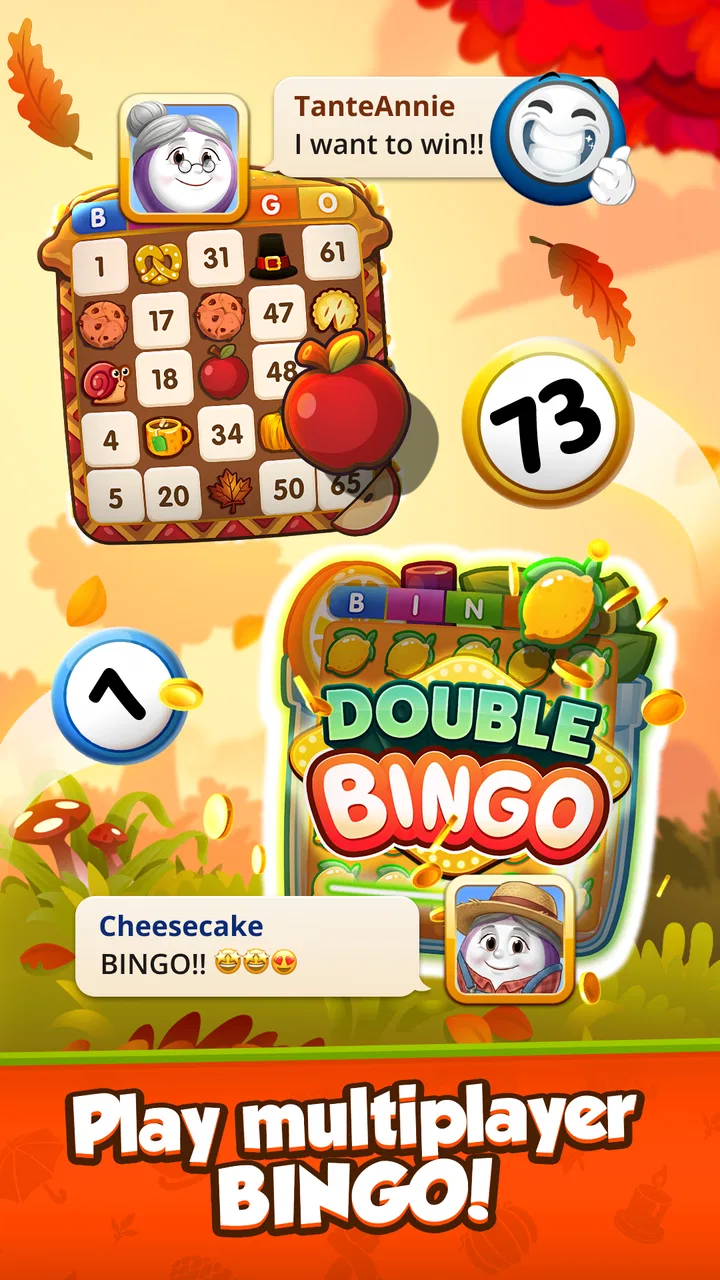
I went into GamePoint Bingo expecting a familiar digital version of bingo, but the part that shaped my experience most was its live, player-focused format. This is not simply a quiet card-marking game that I can play at my own pace. Its appeal comes from joining an active bingo session where the atmosphere is built around other real players, quick decisions, and the feeling that each round is happening with a room full of people rather than in isolation.
That distinction matters. Many bingo apps are best treated as short solo distractions, while this one aims more directly at the social side of the board-game category. I found it most enjoyable when I wanted a lightweight activity with a little tension and a sense of occasion. The game is free to install, and GamePoint presents it as a live bingo party rather than a traditional offline board experience. In my view, that makes it especially suitable for players who enjoy the rhythm of repeated rounds and the energy of a shared game.
Why the live-player format changes the experience
The central capability here is the connection with real players during bingo sessions. That sounds like a small distinction, but it changes how I approach every round. In a solo game, I can pause mentally, take my time, or treat the result as completely disposable. In a live setting, even a simple card becomes more engaging because I am aware that the round has a shared pace and that other people are participating at the same time.
You May Also Like

 Blood Strike: 2.5 Anniversary
Blood Strike’s Loadouts Turn Every Drop Into a Tactical Gamble
A close look at Blood Strike’s custom loadouts: how fast access to signature weapons reshapes its battle royale rhythm, rewards preparation, and narrows the gap between fights.

 Pandora - Music & Podcasts
Pandora’s Music Is Easy to Start, but Harder to Recover
Pandora’s strength is its low-effort path from a seed to a station. Its weak spot is how much confidence it asks you to place in connection, setup, and quiet recovery.

 8 Ball Pool
 Is Built on Rivalries, Rematches, and Routine
A close look at the rivalries, rematches, shared routines, and unanswered safety questions that turn a quick pool match into a persistent mobile community.

 Samsung Music
’s Quiet Strength Is Playing What You Already Own
Its reach comes less from spectacle than from dependable access to a personal library. That simplicity is both the app’s strongest retention engine and its ceiling.

 AccuWeather: Weather Radar
AccuWeather Review: A Quick, Clear Forecast for Everyday Decisions
For everyday plans, the best forecast is the one you can understand quickly. AccuWeather makes rain timing, radar, and local conditions easy to act on, with a few trade-offs.

 Hill Climb Racing
Why Hill Climb Racing Still Turns Crashes Into One More Run
A tiny car, a bumpy hill and one more upgrade: Hill Climb Racing keeps resurfacing because its simple chaos makes every near-miss feel personal.
More From Our News Desk



I would describe the game as a board-style bingo experience with a party atmosphere. The basic appeal remains easy to understand: watch the calls, mark the matching spaces, and stay alert for a winning pattern. The live presentation gives that familiar loop more urgency without requiring the complicated rules of a strategy board game. Someone who already knows bingo can start comfortably, while a newcomer can understand the objective without studying a long tutorial.
What I like about this design is that it creates a middle ground between a social game and a casual pastime. I do not need a group of friends available at the same moment, yet I also do not feel completely alone in the session. That makes it useful when I want company without committing to voice chat, a long multiplayer match, or a competitive game that demands constant planning.
The public response suggests that this approach has found a sizable audience. The game has an average rating of 4.6 from around 46 thousand ratings, with roughly 2.1 thousand written reviews and over 1 million installs. Those figures do not replace personal testing, but they do help explain why the live format continues to attract attention years after its release.
What the live element adds to ordinary bingo
The main benefit is momentum. A live round encourages me to remain present instead of letting the game sit untouched while I multitask. That can be a strength when I am taking a short break and want something that occupies my attention immediately. It also makes wins feel more meaningful than they often do in a purely automated bingo app, because the result belongs to a shared session rather than a private sequence of random outcomes.
There is also a social feeling without the pressure of direct conversation. I can enjoy the sense of participation even if I prefer not to communicate with strangers. For me, this is one of the more practical reasons to choose it over an offline bingo game. It offers the atmosphere of a group activity while keeping the controls and objective familiar.
At the same time, the live format is not automatically better for everyone. If I want a completely calm game that I can stop at any moment, the shared pace may feel restrictive. Bingo is simple, but the need to follow an active round means that this is not the best choice when my attention is constantly being pulled elsewhere. The very feature that gives the game energy can also make it less relaxing than a slower, private alternative.
How a typical session feels in practice
My preferred way to use the game is to treat each session as a short activity rather than an endless commitment. I open it when I have enough uninterrupted time to follow the round, settle into the pace, and pay attention to the card. That approach works better than starting a game while waiting for something that could happen at any moment, because the live format rewards focus more than casual background play.
The basic interaction is approachable. Bingo does not ask me to memorize a large set of rules or build a complicated strategy deck. The challenge comes from recognizing calls promptly and keeping track of the card accurately. That simplicity is valuable on a phone: I can understand what I am doing quickly, and the game does not bury its main activity beneath layers of menus or character systems.
One useful habit is to decide before joining a session how much attention I am willing to give it. If I am genuinely free for a few minutes, the game feels brisk and entertaining. If I am answering messages or moving between tasks, I am more likely to miss the rhythm and enjoy it less. This is a small adjustment, but it prevents the common mistake of judging the game unfairly when the real problem is using a live activity during an unsuitable moment.
I also recommend treating the game’s rewards carefully. The title is free, but it includes in-app purchases ranging from $0.99 to $234.99 per item. That is an important practical consideration, particularly for anyone who enjoys collecting, progressing, or chasing bigger rewards. I would set a personal spending limit before getting invested in repeated sessions. The game can be enjoyed as a free download, but the presence of optional purchases means I would not hand it to a child without checking the device’s purchase controls first.
The Teen content rating is another reason I would approach it as a general audience game for older players rather than an automatic children’s activity. The rating does not make it unsuitable for every younger player, but parents should still consider the online, live-player setting and the purchase structure before allowing unsupervised play.
A practical routine for new players
When starting, I would focus on learning the pace rather than trying to maximize every possible reward immediately. The first few sessions are useful for discovering whether the live timing suits me and whether I enjoy the repeated bingo loop. I would also avoid spending simply because a round feels close. A near win can make a player want to chase the next result, but that emotional reaction is precisely when a preset limit is most useful.
Another helpful approach is to play when the phone is stable and notifications are under control. A live bingo game is more vulnerable to interruption than a turn-based puzzle. If a call or message takes my attention away at the wrong moment, the experience becomes frustrating even though the game itself has not changed. Turning on a brief focus mode or choosing a quieter break can make a noticeable difference.
Finally, I would judge the game by the quality of its moment-to-moment entertainment, not only by whether I win. Bingo naturally includes chance, so a losing session does not necessarily mean I played badly. If I enjoy the shared pace and the small suspense of each round, the game can still work as a casual pastime. If I only find it satisfying when rewards arrive, the purchase system may become more prominent than the actual game.
The best everyday scenario for GamePoint Bingo
The clearest use case for me is a short evening break when I want something more engaging than scrolling but less demanding than a full strategy game. I can sit down, join a live bingo session, and give it my attention for a compact stretch. It works especially well when I want a little social atmosphere without arranging a multiplayer appointment with friends.
I can also see it fitting into a shared household routine. Two people might play separately while sitting in the same room, comparing the general experience without needing to coordinate a private match. That is different from local multiplayer, but it still gives the activity a communal feeling. The game’s value in that situation comes from being easy to understand and quick to enter, not from offering deep tactical planning.
For players who enjoy online communities but do not want the intensity of action games, this format can be a comfortable alternative. The interaction is centered on the bingo round, so I am not required to master complex controls or react to a rapidly changing battlefield. The social element remains present in the background, which may appeal to people who like shared play but prefer a gentler pace.
It is less convincing as a game for long uninterrupted sessions unless I genuinely enjoy the core bingo loop. The structure is intentionally repetitive: the pleasure comes from the anticipation, the live setting, and the possibility of a successful card. Someone looking for a story, evolving levels, character development, or elaborate strategy will probably find the experience narrow. In that case, a traditional board-game adaptation or a deeper multiplayer title would offer more variety.
How it compares with familiar alternatives
Compared with offline bingo, GamePoint’s strongest difference is the feeling of joining a wider player community. Offline play is better when I want complete control over timing or when I am playing with people physically beside me. This app is better when I want the convenience of a phone and the atmosphere of a live session without organizing the group myself.
Compared with solo bingo apps, the live-player approach gives the rounds more urgency. A solo alternative may be preferable for practicing at my own speed, playing with limited attention, or avoiding the distractions that can come with online participation. I would choose this game when the shared environment is part of the entertainment, not merely because I want to mark bingo cards on a screen.
Compared with digital versions of more complex board games, it is much easier to learn but less strategically rich. There is no need to spend time understanding a large rulebook before the first enjoyable round. The trade-off is that the long-term variety depends heavily on whether I like bingo itself. The game is focused rather than broad, and that focus is either its advantage or its limitation depending on what I expect from a mobile game.
Where the experience asks for patience
The biggest limitation is the dependence on attention. Because the central experience is live, interruptions can hurt more than they would in a turn-based board game. I would not start a session while commuting through unreliable connectivity, handling work, or looking after something that needs immediate attention. Even a simple game can become inconvenient when the timing does not match real life.
The second trade-off is the repeated nature of bingo. The live presentation adds energy, but it does not transform the basic activity into a strategy adventure. After several sessions, I need to be honest about whether the anticipation still feels enjoyable. Players who need constant new mechanics may lose interest, while people who like familiar routines may appreciate exactly that consistency.
The purchase range also deserves a clear warning. A free entry point is welcome, but optional items that reach $234.99 per item create a very different experience from a completely free board game. I would keep purchases disabled for children and decide in advance whether I am willing to spend anything at all. The safest way to enjoy the game is to treat paid items as optional extras rather than necessary steps toward having fun.
There is also a difference between social presence and meaningful friendship. Playing alongside real people can make a round feel lively, but it does not necessarily provide the same connection as a private game with friends. If my goal is conversation, teamwork, or a personal group tradition, a dedicated multiplayer platform may suit me better. This title delivers shared participation, not a replacement for every kind of social game.
Device and access considerations
The game supports devices running Android 8.0 or later, which makes it accessible to many older phones and tablets that are still in everyday use. Its current version is 1.301.60862, so I would check that my device can install the available release before planning to use it on an older handset. I would also keep the app updated when possible, because live games benefit from running a current version even when the basic rules remain familiar.
Since it is a mobile online-style experience centered on live participation, I would reserve enough battery and use a dependable connection for longer sessions. I do not need a premium gaming phone to understand the appeal, but a small screen, unstable network, or frequent background interruptions can make card tracking less comfortable. A larger display may be preferable for players who have difficulty reading compact game elements.
GamePoint is the developer behind the title, and the game has been available since March 18, 2015. That long presence helps explain why it feels like an established bingo product rather than a brand-new experiment. Still, longevity alone should not decide whether I keep it installed. The important question is whether I enjoy its particular combination of simple board play, live pacing, and optional spending.
Who will get the most from it
I would recommend this game to someone who already likes bingo and wants a more active, populated version of it on a phone. It is also a good fit for casual players who want a quick board game with a social atmosphere but do not want to learn complex systems. The easy-to-follow objective makes it approachable, while the live format gives regular sessions more personality than a purely solitary card generator.
It may also suit people who enjoy routine. If I like returning to a familiar activity, following a recognizable rhythm, and measuring enjoyment through small moments of suspense, the focused design can be satisfying. The game does not need to become a major hobby to be worthwhile; it can simply fill a short break when I want something more interactive than passive entertainment.
I would suggest skipping it if I want offline access, complete control over pacing, or a game built around deep strategy. I would also steer clear if I know that reward-driven systems tempt me to spend beyond my intentions. In that situation, a paid board game with a fixed price or a free offline puzzle would be a healthier match. Likewise, players seeking a strong story or substantial progression should look elsewhere rather than expecting live bingo to provide those things.
After using it, my opinion is positive but specific: this is best understood as a live bingo social game, not as an all-purpose board-game collection. Its real strength is the way real-player participation gives a simple activity a shared pulse. Its real weakness is that the same live structure demands attention and sits alongside a broad in-app purchase range.
For me, the decision is straightforward. I would install it when I want accessible bingo with a sense of community, play in short focused sessions, and keep spending boundaries firmly in place. If that sounds like the kind of casual entertainment you are looking for, GamePoint Bingo is worth trying as a free game. If you prefer quiet solo play, richer strategy, or a completely fixed-cost experience, a different board-game alternative will probably serve you better.
FAQs for GamePoint Bingo Games of Bingo
01What is GamePoint Bingo Games, and how does it differ from traditional bingo?
GamePoint Bingo Games is a mobile app that offers a modern twist on the traditional game of bingo. Unlike the classic version, this app provides a variety of themed rooms, power-ups, and social features, enhancing the gaming experience. Players can interact with friends, compete in tournaments, and enjoy special events, making it more dynamic and engaging.
02Is GamePoint Bingo Games free to play, and are there in-app purchases?
Yes, GamePoint Bingo Games is free to download and play. However, it offers in-app purchases for players who wish to enhance their experience. These purchases can include additional coins, power-ups, and special items. While optional, they can provide advantages and accelerate progress in the game.
03What are the main features of GamePoint Bingo Games?
The app includes multiple bingo rooms with different themes, daily bonuses, and special events. Players can enjoy social features like chatting with friends, joining clubs, and competing in leaderboards. Additionally, the game provides power-ups to boost gameplay and enhance the chances of winning.
04How can I interact with other players in GamePoint Bingo Games?
GamePoint Bingo Games includes a robust social system that allows players to chat with others in real-time. Players can join or create clubs, participate in group events, and send gifts to friends. This social interaction enhances the community feel and makes playing more enjoyable.
05Are there any technical requirements or compatibility issues for GamePoint Bingo Games?
GamePoint Bingo Games is available on both Android and iOS platforms. It requires a stable internet connection to play, as it is an online multiplayer game. Most modern devices will run the app smoothly, but it's always a good idea to check for the latest OS version and app updates to ensure optimal performance.
Pros
- Engaging multiplayer experience.
- Regular updates with new features.
- User-friendly interface design.
- Plenty of free daily bonuses.
- Various themed bingo rooms.
Cons
- Requires a stable internet connection.
- In-app purchases can be pricey.
- Occasional ad interruptions.
- Limited offline play options.
- High battery consumption.

GamePoint Bingo Games of Bingo
Gallery